


Understanding Sorbents: Choosing the Right Spill Control Supplies
By Grainger Editorial Staff 1/26/26
Spill control isn’t one-size-fits-all. Learn how different sorbents and spill kits work, what types are available and how to select the right spill control supplies based on spill risk, environment and your compliance needs.
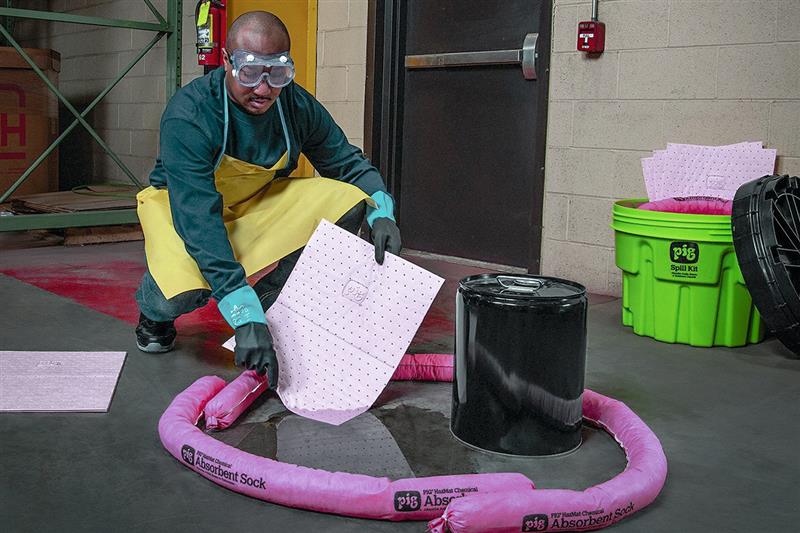
Spill control is a routine part of facility operations, but choosing the right supplies isn’t always as straightforward as it seems. A slow drip under equipment and a larger spill in a production, fueling or healthcare environment can require very different approaches. Having the right spill control supplies on hand can help reduce slip hazards, limit exposure to hazardous liquids and make cleanup safer.
Choosing the right sorbent starts with understanding the spill itself. When you evaluate spill risks first, you can help narrow your options and select supplies that better match your environment and overall safety requirements.
What Sorbents Do and Why the Right One Matters
Sorbents are materials used to help contain and manage liquid spills. Depending on the product, a sorbent can soak liquid into its structure or hold it on the surface. These behaviors are commonly referred to as absorption and adsorption, and many spill control products rely on a combination of both to help manage different types of spills.
Material compatibility is another important factor. Not all sorbents are designed for the same liquids, and using the wrong type of sorbent can increase cleanup time, raise exposure risk or complicate disposal. Spill conditions such as surface type, spill volume, how thick or thin a liquid is, and where the spill occurs can all affect how well a sorbent performs.
Sorbents also vary in how much liquid they can hold. Depending on the material, absorbency capacity can range from a few times the sorbent’s weight to much higher levels for some synthetic materials. This variation is one reason material selection matters when planning for recurring leaks versus larger spills.
Types of Sorbents
- Universal sorbents and spill kits help manage common oil and water-based spills found in many maintenance and production settings. They are often used for everyday leaks and drips.
- Oil-only sorbents are designed to attract oil while repelling water, which can help when spills occur outdoors, near drains, or on water. Some oil-only spill kits are also made with biodegradable sorbent materials, which can be useful in outdoor areas or locations where environmental considerations are a concern.
- Fuel and flammable liquid sorbents and spill kits are often used for fuels and other flammable liquids commonly found in fueling and storage areas, where fast absorption and controlled cleanup are important.
- Harsh chemical sorbents are designed for stronger acids, bases and corrosives often used in industrial and production environments. Some spills may also require chemical neutralizers before cleanup or specialized spill kits.
- Biohazard sorbents help contain and solidify bodily fluids and organic liquids in healthcare and institutional environments, supporting safer handling during cleanup.
- Mercury sorbents help support the cleanup and disposal of spills using products specifically designed for mercury.
Many sorbents are also color-coded to help users quickly identify their intended use. Although this color-coding isn't established by OSHA or another regulatory agency, it is widely used across manufacturers and facilities as a visual reference. In many facilities, gray sorbents are used for universal applications, white sorbents for oil-only spills, and yellow sorbents are often used for chemical or hazardous materials. Color alone does not determine compatibility, but it can help support faster identification during spill response.
Safety, Compliance and Environmental Considerations
Spill control supplies help support workplace and environmental safety. Under 29 CFR 1910.22 (a), OSHA requires employers to help keep walking and working surfaces clean, dry and free of hazards that could cause slips or falls. Sorbents can help manage leaks, drips and spills that could create unsafe working conditions.
For oil spills, EPA regulations under 40 CFR 112.7 identify sorbents as an approved method to help prevent oil from reaching waterways or groundwater. Facilities that store or handle oil may use oil-only sorbents as part of a broader spill prevention and containment program.
Sorbents can help support compliance efforts, but they do not replace spill prevention plans, training or reporting procedures. Selecting sorbents designed for the liquids used in a facility can help support safer handling, more controlled cleanup and proper disposal in line with internal policies and regulatory requirements.
How to Evaluate Your Spill Control Needs
Spill risks aren't the same across facilities. The types of liquids in use, where work takes place and how spaces are configured all influence how spills occur and how they need to be managed.
In many workplaces, common spill risks include oils, coolants, fuels, chemicals or bodily fluids. Spills can happen on smooth floors, uneven surfaces, outdoor areas or near drains and water sources. Factors such as spill size, frequency and whether a liquid poses a chemical, biological, environmental or fire risk can also affect how a sorbent performs. Other considerations can include foot traffic, nearby equipment and whether sorbents need to remain in place for extended periods of time.
Understanding these conditions can help narrow options and focus attention on the sorbent categories that best fit your facility’s needs.
Quick Comparison: Which Sorbent Fits Your Spill?
Use the chart below as a quick reference to help match common spill scenarios with the right type of sorbent.
| Sorbent | Spill Type | Common Locations | Common Forms | Typical Uses |
|---|---|---|---|---|
|
Universal |
Water and oil-based liquids |
Shops, maintenance areas |
Pads, rolls, socks, pillows, mats, granular, kits |
Everyday leaks and drips |
|
Oil-Only |
Oil and oil-based fluids |
Outdoors, near water |
Pads, rolls, socks, booms, pillows, mats, granular, kits |
Removal of oil from water-based spill |
|
Fuel and Flammable |
Gasoline, diesel and other flammable liquids |
Fueling and storage areas |
Pads, rolls, socks, granular, kits |
Flammable liquid spills |
|
Harsh Chemical |
Acids, bases and other corrosives |
Production, labs |
Neutralizers, pads, rolls, socks, pillows, granular, kits |
Chemical exposure risk |
|
Biohazard |
Bodily fluids |
Healthcare, custodial |
Pads, rolls, granular, floor skimmers, kits |
Infection control |
|
Mercury |
Mercury |
Labs, medical devices |
Sponges, pickup tools, powders, waste containers, kits |
Specialized toxic cleanup |
Spill Kits and Preparedness
Spill kits help keep sorbents and cleanup supplies organized and accessible whenever they are needed. Choosing the right spill kit follows many of the same considerations used when selecting individual sorbents. Matching the kit to the liquid type, expected spill size and location are all factors that can help provide faster and more efficient spill response. In food processing environments, some spill kits are designed to meet the National Sanitation Foundation (NSF) J1 requirements, meaning they can be used in areas where incidental food contact can occur.
Spill kits are available in different formats, including single-use kits designed for one-time cleanup and refillable kits that can be easily restocked after use. Kit container styles like bags, bins, drums, wheeled carts and cabinets can also impact where supplies are staged and how easily they can be accessed during a spill. Some spill kits use containers like overpack drums, which can store cleanup supplies and later be used to help collect and safely dispose of materials after a flammable liquid spill.
In addition to spill kits, accessories such as cabinets, carts and dispensers provide designated storage for sorbents and cleanup supplies. Keeping these materials stored in consistent, visible locations helps ensure they are available and ready for use when a spill occurs.
Disposal Considerations
Disposal requirements often vary based on the type of spill and liquid involved. Facilities should always follow established internal procedures and applicable local, state and federal guidelines when handling and disposing of any used sorbents. Disposal planning is also an important part of overall spill preparedness.
Choosing the right spill control supplies starts with understanding the spill risks in your environment. Being prepared and selecting the right products can help make spill response safer, more efficient and easier to manage.
RECOMMENDED KNOWHOW FOR YOU

PPE in the Workplace
Gender-Specific PPE: Finding PPE Fit for Women
Learn why properly fitting PPE for women helps improve safety, comfort and compliance and how employers can support access to gear that fits.

![]() Our Latest KnowHow
Our Latest KnowHow

The Complete Tool Storage and Organization Guide
Storing tools the right way makes life easier. Tool storage cabinets, tool chests and lockers are just the beginning to storage and organization.




The information contained in this article is intended for general information purposes only and is based on information available as of the initial date of publication. No representation is made that the information or references are complete or remain current. This article is not a substitute for review of current applicable government regulations, industry standards, or other standards specific to your business and/or activities and should not be construed as legal advice or opinion. Readers with specific questions should refer to the applicable standards or consult with an attorney.


CONNECT WITH US




SIGN UP FOR EMAIL
Get more great content in your inbox.